
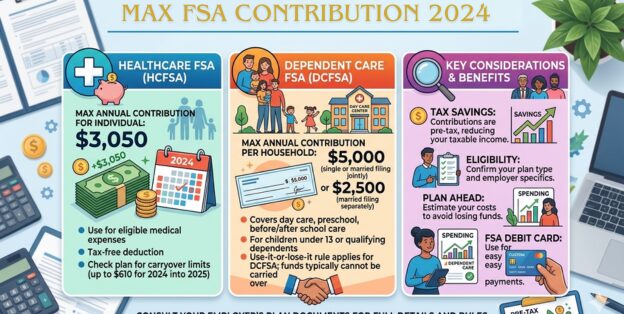
Flexible Spending Accounts (FSAs) are among the most effective ways for employees to reduce healthcare costs while lowering their taxable income. These employer-sponsored accounts allow workers to set aside pre-tax dollars to pay for qualified medical expenses throughout the year. Understanding contribution limits, rules, and eligible expenses is essential for making the most of this benefit.
This comprehensive guide explains the Max FSA Contribution 2024, how Flexible Spending Accounts (FSAs) work, the IRS regulations governing these accounts, and the tax advantages employees can gain by participating in an FSA program.
It will detail the amount employees can contribute, the eligible expenses covered, and the rules governing the “use-it-or-lose-it” policy. Furthermore, the guide will explore how contributions are deducted from employees’ pre-tax income, thereby lowering their taxable income for the year.
| Category | Details |
| Maximum Contribution Limit (2024) | Employees can contribute up to $3,200 per year to a Healthcare Flexible Spending Account. |
| Carryover Limit (If Allowed by Employer) | Up to $640 of unused funds may be carried over to the next plan year. |
| Employer Contributions | Employers may contribute additional funds, but total contributions typically cannot exceed IRS limits. |
| Eligibility | Employees must be enrolled in an employer-sponsored FSA plan. |
| Contribution Method | Contributions are made through pre-tax payroll deductions during the plan year. |
| Qualified Medical Expenses | Includes doctor visits, prescription medications, dental care, vision services, medical equipment, and certain over-the-counter products. |
| Tax Benefits | Contributions reduce taxable income, lowering federal income tax, Social Security tax, and Medicare tax. |
| Use-It-or-Lose-It Rule | Funds must generally be used within the plan year unless a grace period or carryover option is offered. |
| Grace Period Option | Some employers allow an extra 2.5 months after the plan year to spend remaining funds. |
| Typical Payment Methods | FSA debit card, reimbursement claims, or direct payment to healthcare providers. |
What Is a Flexible Spending Account (FSA)?
A Flexible Spending Account is a tax-advantaged account offered by many employers to help employees pay for healthcare costs. Workers contribute a portion of their salary into the account before taxes are deducted. These funds can then be used to cover various medical expenses. Because the contributions are made with pre-tax income, employees can lower their overall taxable earnings while paying for necessary healthcare services.
Key Features of FSAs
- Contributions are deducted from paychecks before taxes
- Funds can be used for approved medical expenses
- Accounts are usually provided through employers
- Annual contribution limits apply
- Unused funds may be subject to a “use-it-or-lose-it” rule
For many workers, FSAs offer a practical way to manage predictable healthcare expenses such as prescriptions, doctor visits, or medical supplies.
Understanding the Max FSA Contribution 2024
Each year, the Internal Revenue Service establishes limits on how much employees can contribute to their Flexible Spending Accounts. These limits are adjusted periodically to account for inflation and economic changes. The maximum FSA contribution for 2024 increased compared to previous years, allowing employees to set aside more pre-tax money for medical expenses.
2024 Contribution Limit
For 2024, the IRS set the maximum contribution limit for healthcare FSAs at $3,200 per employee. This means an employee can allocate up to this amount from their salary into an FSA during the year. Married couples who both have access to FSAs through their employers may each contribute the maximum allowed.
FSA Contribution Limits Overview
The following table highlights the key limitations and carryover rules for FSA plans.
| Category | 2024 Limit |
| Maximum employee contribution | $3,200 |
| Maximum carryover allowed (if employer permits) | $640 |
| Employer contributions | Varies by employer |
| Contribution frequency | Per calendar year |
Employers may also add contributions to an employee’s FSA, but total contributions typically cannot exceed the IRS cap.
How Flexible Spending Accounts Work?
An FSA operates through payroll deductions arranged during an employer’s benefits enrollment period. Employees estimate their healthcare expenses for the upcoming year and decide how much to contribute. Once the plan year begins, the full elected amount is generally available for use even if the employee has not yet contributed the full amount through payroll deductions.
Steps in Using an FSA
- Employee selects an annual contribution during enrollment.
- The employer deducts funds from each paycheck before taxes are withheld.
- Funds are stored in the employee’s FSA account.
- Employees use an FSA debit card or submit reimbursement claims.
- Approved expenses are paid using the account balance.
This system allows employees to pay medical costs with tax-free funds, resulting in significant savings.
IRS Rules Governing FSAs

- Contributions must be made through payroll deductions
- Funds must be used only for qualified medical expenses
- Contribution limits must follow the annual IRS cap
- Plans are typically tied to employer-sponsored benefit programs
- Unused funds may be forfeited if not used within the plan period
Eligible Medical Expenses Covered by FSAs
One of the most valuable aspects of a Flexible Spending Account (FSA) is its ability to cover a wide range of healthcare costs. These accounts can cover many medical, dental, and vision expenses that insurance may not fully cover. Common qualified expenses often include doctor visits and hospital services, prescription medications, medical equipment and supplies, dental treatments and orthodontics, vision exams and eyeglasses, contact lenses and solutions.
As well as physical therapy services. Since these costs can quickly add up throughout the year, an FSA can be an effective financial planning tool for managing healthcare expenditures.
Examples of FSA-Eligible Items
Some everyday health products also qualify for reimbursement.
Examples include:
- Bandages and first-aid kits
- Blood pressure monitors
- Pregnancy tests
- Thermometers
- Sunscreen with SPF 15 or higher
- Medical braces and supports
Employees should always verify whether an expense qualifies before using their account funds.
Use-It-or-Lose-It Rule Explained
FSAs typically follow a rule requiring employees to spend their funds within the plan year, and any unused money after the deadline may be forfeited. However, many employers now offer additional options to help employees avoid losing their funds.
Possible employer options include allowing a carryover of the carryover amount into the next plan year, offering a grace period of up to 2.5 months, or providing limited extensions for submitting reimbursement claims. To make the most of their Flexible Spending Accounts, employees should check their employer’s specific plan rules to understand which options apply to their situation.
Carryover Rules and Grace Periods
Some employers permit a limited amount of unused funds to roll over into the next year. For 2024, the IRS allows up to $640 in unused FSA funds to carry over if the plan includes this option.
Two Common Approaches
Carryover Option
- Allows unused funds up to a specified limit
- Remaining funds will be transferred to the next year
Grace Period Option
- Extends the spending deadline by up to 2.5 months
- Allows employees extra time to use remaining funds
Employers typically offer only one of these options, not both.
How to Estimate Your FSA Contribution
Choosing the right contribution amount requires estimating expected medical expenses for the upcoming year.
Factors to Consider
Employees should evaluate:
- Past healthcare spending
- Expected doctor visits
- Prescription costs
- Dental treatments or procedures
- Vision care needs
A careful estimate helps avoid contributing too little or leaving unused funds in the account.
Strategies to Maximize FSA Benefits
Making the most of a Flexible Spending Account (FSA) requires thoughtful planning throughout the year. To optimize their FSA, employees should regularly track healthcare expenses, schedule appointments before deadlines, and keep receipts for reimbursements.
Additionally, periodically reviewing eligible expense lists and planning purchases of medical supplies can further enhance their experience. By following these smart planning tips, employees can ensure they fully utilize their contributions and make the most of their FSA benefits.
Common Mistakes Employees Should Avoid
While FSAs offer many benefits, certain mistakes can reduce their effectiveness.
Frequent Errors
- Overestimating medical expenses
- Missing reimbursement deadlines
- Not checking the eligible expense lists
- Forgetting to submit receipts
- Ignoring employer plan rules
Avoiding these mistakes helps employees maximize their savings.
FSA vs Health Savings Account (HSA)
| Feature | Flexible Spending Account (FSA) | Health Savings Account (HSA) |
| Sponsorship | Employer-sponsored | Individually owned |
| Eligibility Requirement | No high-deductible health plan required | Requires enrollment in a high-deductible health plan |
| Fund Rollover | May have use-it-or-lose-it rules | Funds roll over every year without limits |
| Tax Advantages | Yes | Yes |
| Access to Funds | Available only during the plan year | Available anytime as long as under a qualifying plan |
Why Employees Should Consider an FSA
For employees with predictable medical costs, FSAs provide a powerful financial tool.
Key Advantages
- Immediate tax savings
- Convenient payment for healthcare expenses
- Wide range of eligible items
- Easy payroll deductions
- Reduced out-of-pocket medical costs
When used properly, an FSA can significantly reduce the overall cost of healthcare.
Final Thoughts
Flexible Spending Accounts remain among the most practical benefits offered by employer health plans. By allowing workers to pay for medical expenses with pre-tax income, these accounts provide meaningful financial relief for many households. Understanding the maximum FSA contribution for 2024, IRS guidelines, eligible expenses, and planning strategies can help employees make smarter decisions during benefits enrollment.
With careful planning and responsible spending, FSAs can reduce healthcare costs while providing valuable tax advantages throughout the year. Employees who anticipate regular medical expenses should take full advantage of their employer’s FSA program to improve both their financial planning and healthcare affordability.
If you want to read an interesting article about it, explore our Finance category.
FAQs
Yes, many dental and vision expenses qualify for reimbursement through a Flexible Spending Account. These expenses may include routine dental checkups, orthodontic treatments, eye examinations, prescription glasses, and contact lenses. Because these services are often not fully covered by insurance, an FSA can help reduce out-of-pocket costs.
The contribution limit primarily applies to the employee’s salary reduction contributions. Employers may choose to add funds to an employee’s account as part of their benefits package. However, the total amount placed in the account must still comply with IRS regulations and plan rules.
Flexible Spending Accounts are generally available only through employer-sponsored benefit programs. Because of this structure, self-employed individuals typically cannot open a traditional FSA. However, they may explore other healthcare savings options, such as health savings accounts, if they meet the eligibility requirements.
Most employees enroll in a Flexible Spending Account during their employer’s annual open enrollment period. This is the time when workers choose their benefits for the upcoming year. If someone misses this period, they usually cannot enroll until the next year unless they experience a qualifying life event that allows changes to their benefits.