
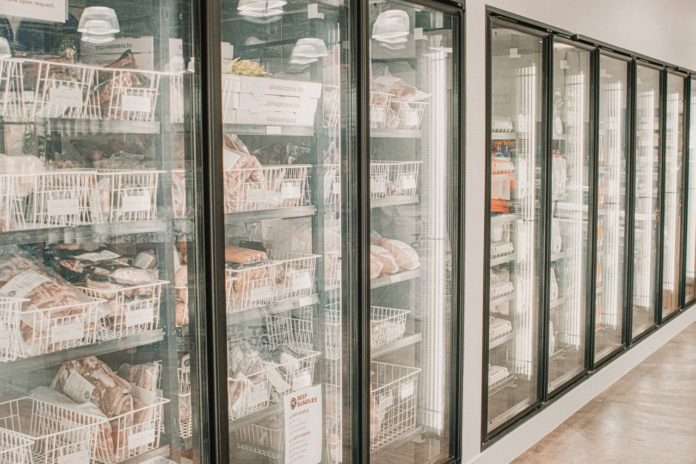
Refrigeration systems run day and night across supermarket sales floors, consuming a substantial share of total electricity. Open coolers work much harder when air circulation patterns inside the cabinets experience physical disruptions.
Steady circulation keeps perishable inventory cold and prevents refrigeration compressors from running non-stop cycles.
Reviewing case hardware and specialized airflow components helps grocery teams identify cooling losses and understand where professional supplier networks provide support.
Stabilizing Multi-Deck Cold Air Boundaries
Open refrigerated display cases rely on a steady vertical barrier of chilled air falling from the upper panel down to the return intake. Drafts from entrance doors or exterior ventilation diffusers break this protective barrier.
When this disruption occurs, ambient humidity enters the cabinet and forces mechanical compressors to run longer cycles at higher electrical loads. Grocery operators turn to commercial refrigeration testing services and certified air balancing contractors to measure these ambient room currents across sales floors.
Maintaining Return Air Grille Passages
Chilled air recirculates through perforated intake grilles positioned along the bottom front of multi-deck cabinets.
Misplaced product packaging, fallen price tags, loose plastic wrappers, and seasonal floor displays restrict these intake openings. Such blockages drop overall air circulation and pull warm room air across the internal cooling coils. Supermarkets routinely partner with commercial sanitation agencies and retail facility maintenance firms that provide scheduled case cleaning without damaging internal sheet metal.
Servicing Cellular Canopy Air Diffusers
Ceiling diffusers inside the upper panel guide chilled air into uniform paths as it leaves the fan compartment. Dust accumulation, physical cracks, greasy residue, and sagging structural grids scatter discharge air across merchandise. Misdirected airflow pulls heat directly into the cabinet interior, accelerating cold loss into the aisles.
Commercial supermarket parts depots and refrigeration refurbishment companies supply custom-sized diffuser panels designed to match specific case models.
Sourcing Compatible Hussmann Case Shelving
Hussmann multi-deck display cases depend on rear wall openings engineered for specific shelf dimensions. Installing replacement shelving with incorrect depths or solid bases alters engineered air channels and produces warm zones across dairy or beverage packages.
Retailers source OEM-compatible Hussmann case shelving through specialized aftermarket case trim suppliers and commercial retail fixture distributors. These aftermarket specialists supply heavy-gauge steel shelves that maintain factory airflow clearances throughout the cabinet.
Upgrading Evaporator Fan Motors
Internal fan assemblies generate the continuous air pressure required to move cold air through case channels. Standard older fan motors release significant heat inside refrigerated compartments and draw substantial continuous wattage from electrical panels. Modern high-efficiency fan motors lower operating temperatures and consume less electrical energy.
Grocery stores work with commercial heating and refrigeration supply houses and mechanical retrofit contractors to source energy-efficient replacement fan units.
Implementing Multi-Position Shelf Brackets
Modifying the downward pitch of case shelving directs cold air downward across packaged goods.
Fixed brackets position items too far forward, letting cold air spill directly into customer walking aisles. Supermarket fixture remanufacturers and commercial shelving dealers offer adjustable brackets supporting flat or angled presentation positions. Purchasing these components through commercial shelving vendors allows store teams to configure interior layouts that preserve air circulation across crowded dairy or juice displays.
Cleaning Internal Evaporator Coils
Frost buildup, airborne debris, biological slime, and grease accumulate on aluminum cooling fins over extended periods of daily store operation. Blocked coil gaps restrict airflow through the cabinet, putting higher resistance on fan motors and forcing refrigeration compressors to run prolonged cycles. Clean metal surfaces restore proper cooling transfer without wasting power.
Supermarket managers hire certified commercial refrigeration service companies and licensed mechanical contractors to perform professional coil sanitation.
Selecting Smooth Protective Shelf Finishes
Flaking paint and surface rust on metal shelves create surface friction that slows air moving underneath merchandise. Corroded surfaces also collect moisture and harbor bacterial growth, creating sanitary issues during health inspections.
Grocers acquire protective powder-coated shelves through commercial metal refinishing services and supermarket equipment refurbishers. These refinishing providers apply smooth industrial finishes that resist commercial cleaning chemicals and maintain unobstructed air movement across every display tier.
Deploying Thermal Night Covers
Open refrigerated displays lose cold air into the store environment after the grocery store closes for the night. Installing woven fabric night covers over open case fronts traps chilled air inside the compartment and reduces runtime demands on refrigeration compressors.
These barriers block nighttime room heat from entering the case. Commercial supermarket energy service providers and refrigeration accessory manufacturers supply manual or motorized night cover systems.
Replacing Damaged Case Trim and Bumpers
Dented case bumpers, misaligned end panels, cracked front glass, and torn bottom trim allow room air to enter cooler interiors.
These physical gaps create turbulence that draws warm store air directly into the lower return air intake. Supermarket fixture restoration specialists and commercial refrigeration parts distributors supply molded replacement bumpers and perimeter trims. Sourcing fitted exterior trim through commercial fixture restoration firms helps maintenance teams restore tight cabinet enclosures without purchasing replacement cases.
Managing Heavy Shelf Weight Distribution
Heavy inventory items cause standard metal shelves to bend downward under continuous physical weight.
Sagging shelf centers obstruct rear air flues, stopping cold air from reaching lower storage decks. Supermarket teams obtain reinforced heavy-duty shelving and structural upright brackets from commercial store fixture manufacturers and industrial racking distributors.
Partnering with specialized retail fixture suppliers provides grocers with rigid steel shelves that hold substantial weight while keeping airflow channels open.
Optimizing airflow across commercial refrigeration equipment requires attention to internal mechanical parts and external shelving hardware. When grocery managers address cabinet circulation issues, store cooling systems run with steady efficiency.
Working with trusted commercial fixture suppliers and refrigeration service contractors provides supermarkets with reliable parts that protect daily merchandise. Taking these practical equipment factors into consideration helps grocery operations control utility expenses and keep food cases running smoothly.